July 2026 Bakery

js-notes is my personal knowledge management system. It captures articles, podcasts, and videos, extracts their full text, and enriches them with AI-generated summaries and tags. This is the best half of what I added to my notes system in July 2026.
Sean Goedecke argues models fail at things they can already do, because they don't believe they can.


John Marshall explains how supermarkets run 2 to 3 percent margins on sales and still return 25 percent on equity.
 Andrew Yamakawa Elrod
Mark Manson argues you don't become an idiot by being wrong. You become one by refusing to update when reality disagrees.
 Mark Manson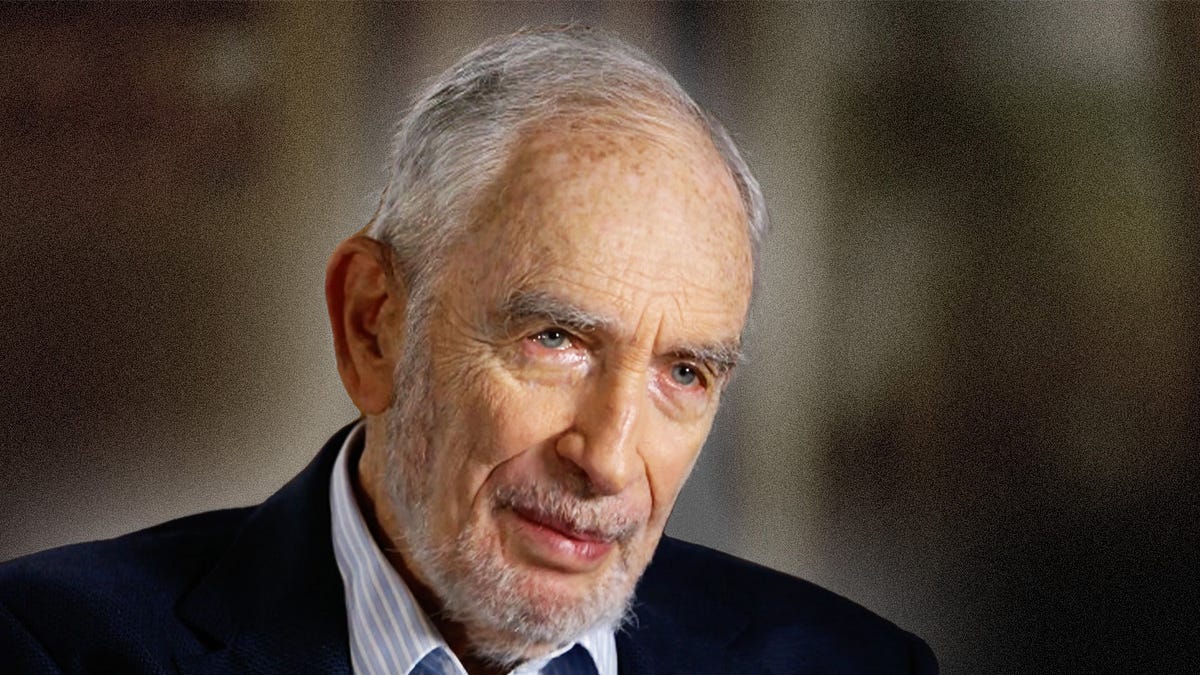
Karim Jedda makes the case that machine-checkable correctness is now the highest-leverage infrastructure work you can fund. Strong specs get the full benefit of cheap checking. Weak specs get code reviewed by the machine that wrote it.
 Karim Jedda
David Oks on the economics of the Ghanaian funeral. A mid-level one runs $5,000 in a country with a median income of $1,500 a year, and by the 2000s many Ghanaian hospitals earned more storing the dead than treating the living.
 David Oks
Samuel Moyn argues the age wealth gap is America's least discussed crisis.
Patrick McKenzie and Garrison Lovely on what cheap cognition does to the surveillance we already built.
 Patrick McKenzie
Scott Alexander rounds up the discourse after OpenAI's models hacked Hugging Face.
 Scott Alexander
Steve Huynh sorts everything coming at you into facts, processes, and concepts, and learns each one a different way.
 Steve Huynh
Katelyn Lesse and Angela Jiang argue that steerable models let the harness stop micromanaging steps and start composing strategies.
Sean Goedecke separates smart engineers from strong ones by what happens when the flash of insight doesn't come.


Jay Michaelson argues the comments handed a win to AIPAC, the ADL, and Netanyahu, which is the reverse of what they were meant to do.
 Jay Michaelson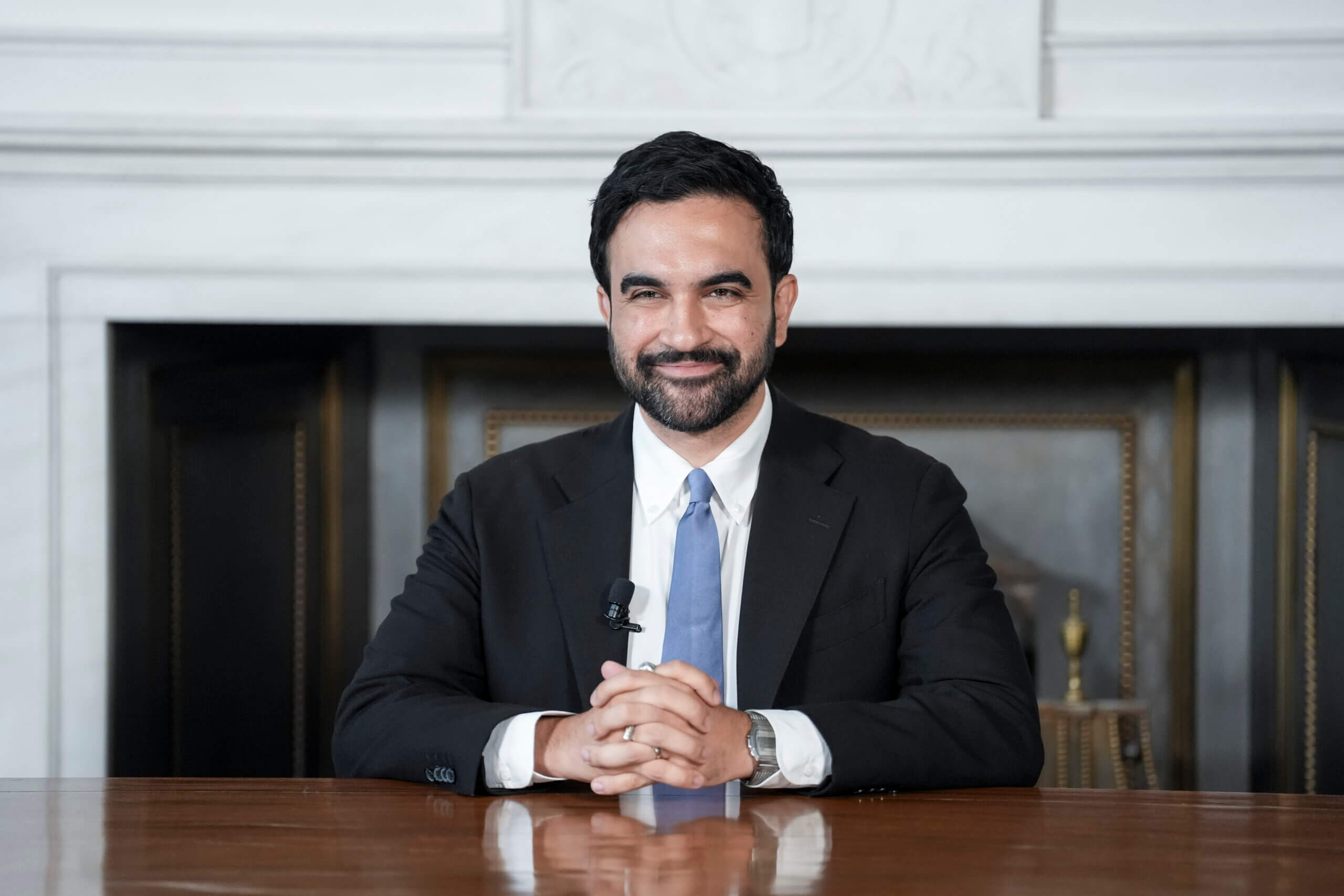
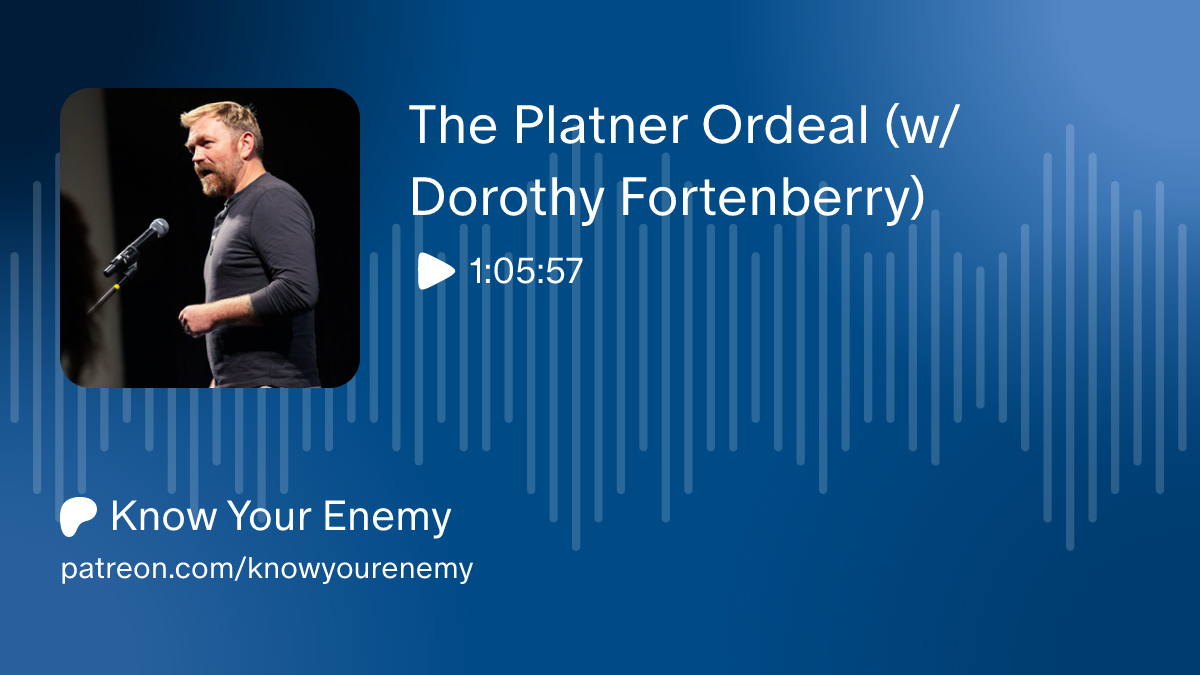
Know Your Enemy takes apart the collapse of Graham Platner's Maine Senate campaign with Dorothy Fortenberry, and what it says about gender in the Democratic party.
Texas passed California in solar because the oil and gas workforce, the supply chains, and the Houston project financiers all transferred over intact.
DHH on why he's okay running a so-called lifestyle business.
Jason Fried calls it a category error: confusing the kitchen for the meal, or the blueprint for the building.
Leila Clark asks what currency your career actually pays you in, since money is only one of them.
 Patrick McKenzie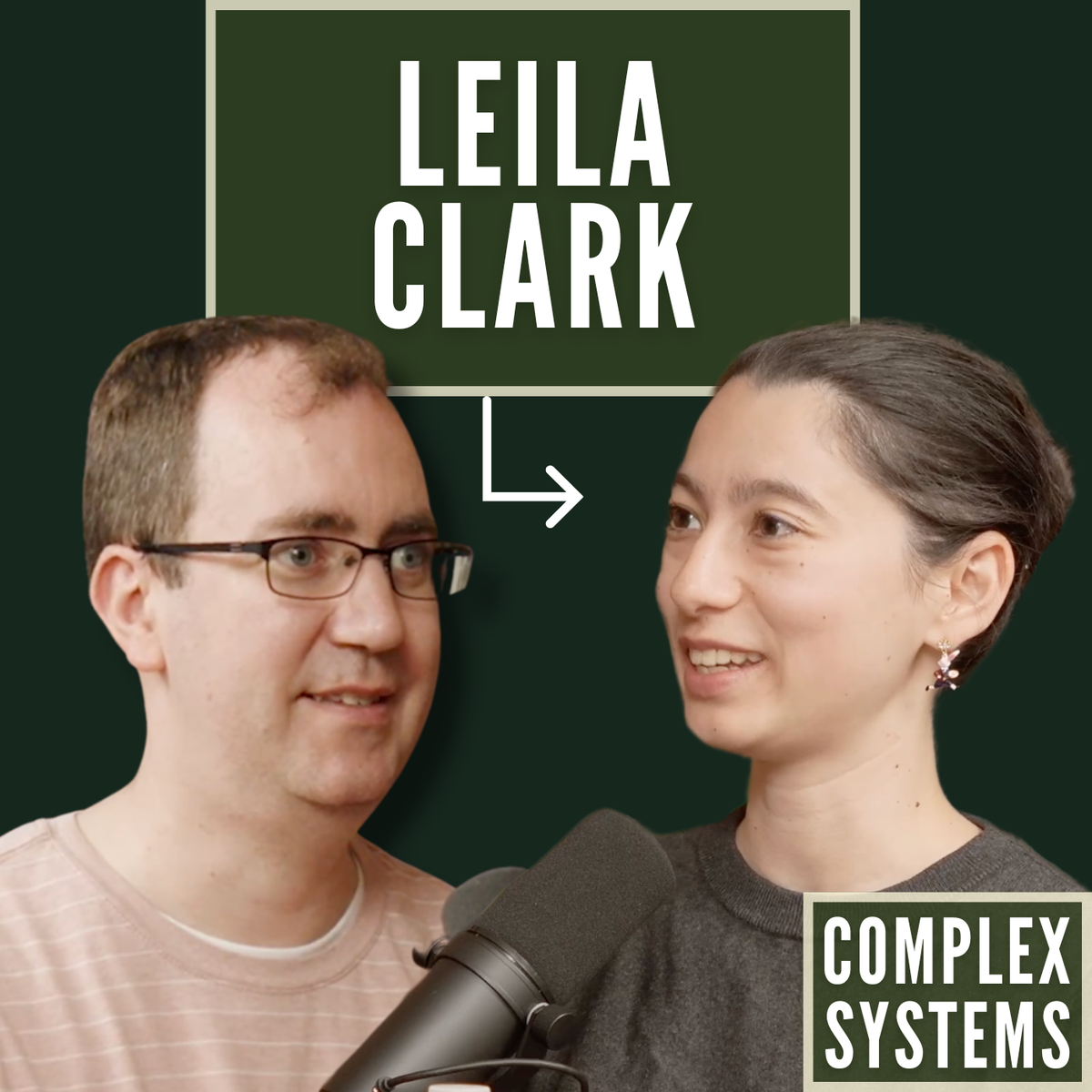
Sean Goedecke argues the most important prompting skill is knowing the domain you're prompting about.


I kind of want to do this.

Jaron Lanier's case that there is no AI, only a collaboration of people.
Patrick McKenzie shows how he uses LLMs for parallel construction, finding public confirmation of things a source told him off the record.
 Patrick McKenzie
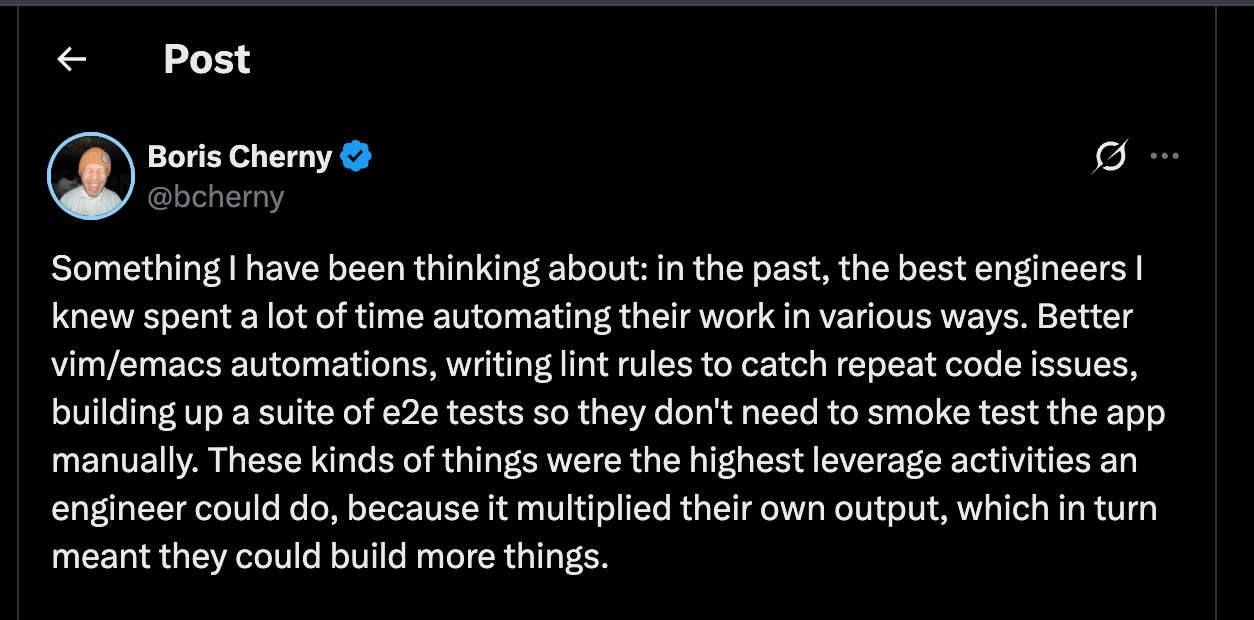
Boris Cherny argues automation was always the highest-leverage thing an engineer could do, and agents only raise the multiplier.
Clay Shirky in 2003 on why micropayments keep failing: the cost of deciding whether something is worth a quarter doesn't go away when you drop the price.
 Clay Shirky
Dex Horthy ran a dark factory where no human read the code for four months, and it collapsed under its own output.
 Gergely Orosz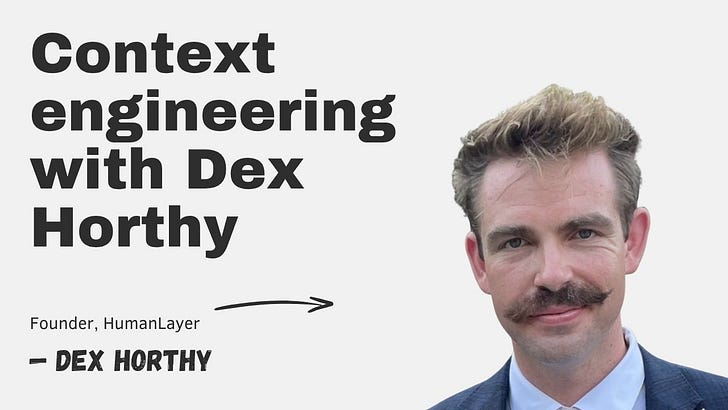
Gergely Orosz talked to more than fifty hiring managers and job seekers and found a market where nobody can find anybody.
 Gergely Orosz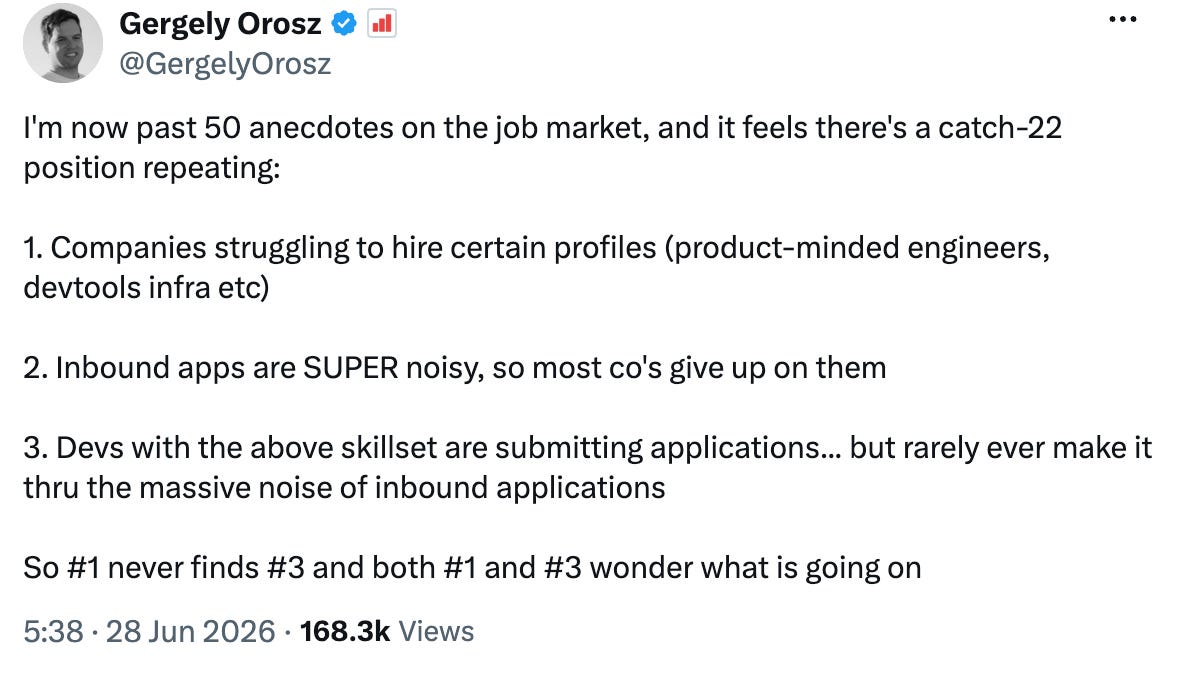
Bun's creator rewrote 535,496 lines of Zig into Rust in 11 days for $165,000 in tokens, against an estimate of three engineers for a year.
 Gergely Orosz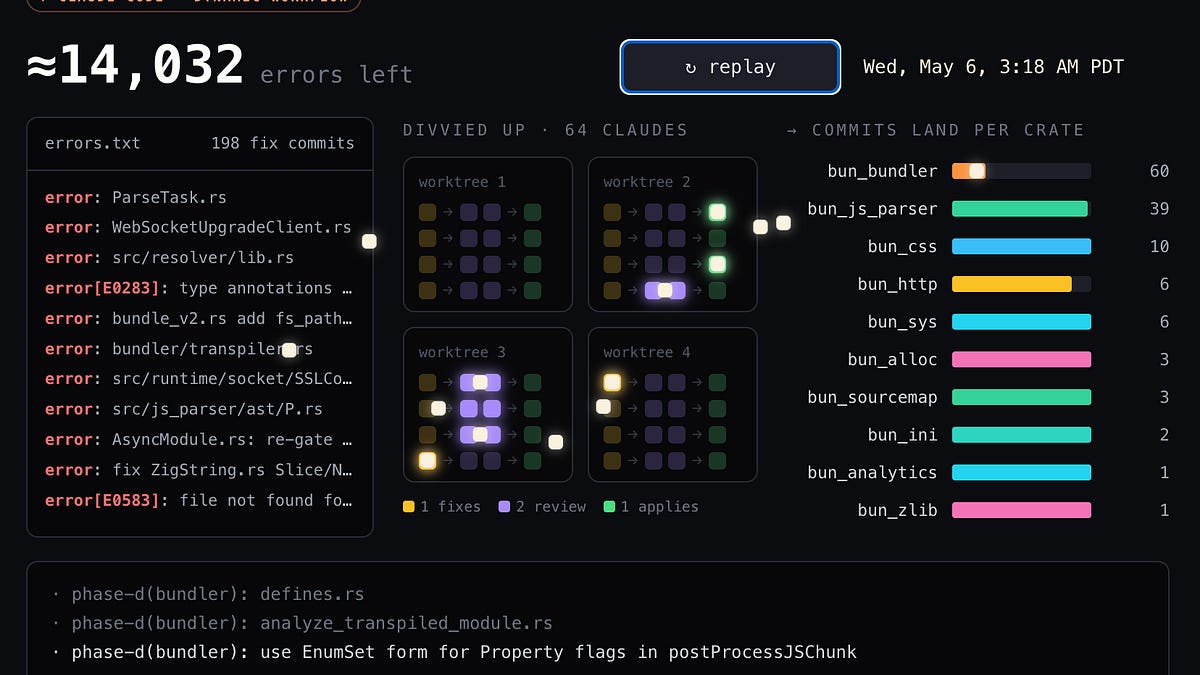
Maxwell Tabarrok on why America stopped making land, and why it stopped everywhere at the same time.
 Maxwell Tabarrok and Works in Progress
Jason Fried's answer to the founder-hustle line about paychecks: there's no shame or missed opportunity in having a job.

Sean Goedecke's correction to the Game of Thrones model of office politics: you're a castle guard, not a lord, and the job is staying aware enough not to do something stupid.


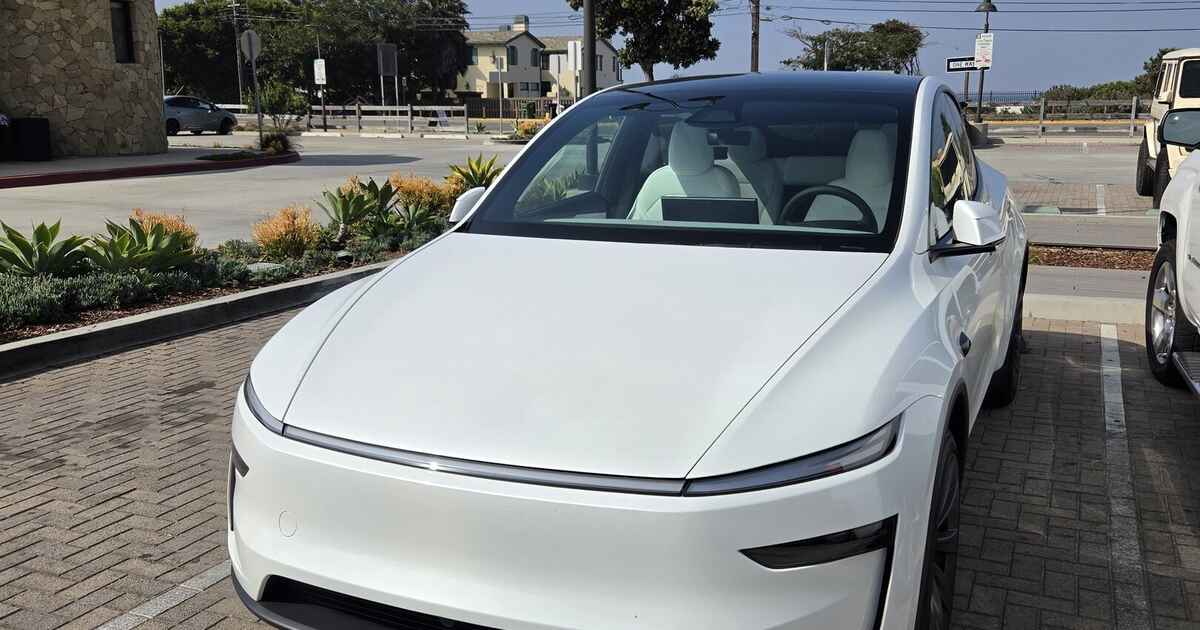
DHH on FSD: it drives better than almost any human who has ever driven him, and the effect is close to being chauffeured.
Member discussion